
Legacy system modernization is one of the major challenges facing CTOs today. These systems, often critical to the business, accumulate technical debt that slows innovation and increases costs.
Why Modernize?
The reasons are multiple:
- Exploding maintenance costs: Skills are becoming scarce, licenses are expensive
- Rigidity: Changes take months, time-to-market lengthens
- Risks: Frequent failures, compromised security, data loss
- Competitiveness: Inability to integrate new technologies (AI, cloud, etc.)
The Classic Mistake: The Big Bang
Many organizations fall into the trap of “rewriting everything from scratch”. Result:
- Project lasting 2-3 years
- Budget explosion
- Late discovery of undocumented business rules
- Failure or catastrophic production deployment
The right approach: progressive modernization.
Our 4-Step Methodology
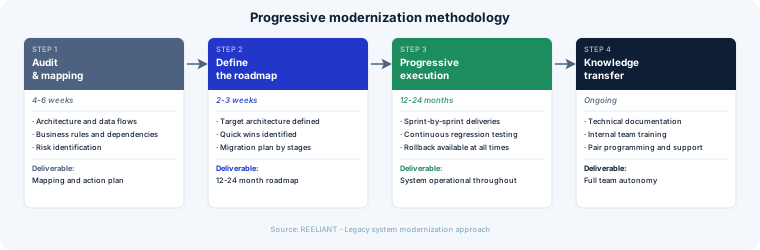
1. Audit & Mapping (4-6 weeks)
Before touching anything, you need to understand the existing:
- Technical architecture: languages, frameworks, databases
- Data flows: who calls whom, what dependencies
- Business rules: where are they coded? Documented?
- Pain points: which modules cause the most problems?
Deliverable: Complete mapping + prioritization of work areas
2. Roadmap Definition (2-3 weeks)
Based on the audit, we define a step-by-step refactoring strategy:
- Target architecture choice (microservices, modular monolith, etc.)
- Identification of “quick wins” (rapid gains, low risks)
- Migration step planning
- Legacy / new system coexistence strategy
Deliverable: 12-24 month modernization roadmap
3. Progressive Execution (12-24 months)
Modernization is done module by module, with:
- Frequent deliveries (2-3 week sprints)
- Systematic regression testing
- Continuous business validation
- Rollback possible at any time
Principle: The system remains operational at all times. No tunnel, no big bang.
4. Knowledge Transfer
A modernized system without a team capable of maintaining it is useless. We support:
- Complete technical documentation
- Internal team training
- Pair programming on initial changes
- Post-production support
Real Use Case
Context: Bank current account management system (15 years old, COBOL, 3M customers)
Approach:
- 6-week audit → Identification of 12 critical modules
- “Transfers” module refactoring first (high business impact, medium complexity)
- Progressive customer migration by segments (1% → 10% → 50% → 100%)
- Result after 18 months: completely modernized system, zero major incidents
Pitfalls to Avoid
- Not involving the business: They know the hidden rules
- Underestimating technical debt: Count on 30% additional time
- Neglecting documentation: Otherwise you recreate undocumented legacy
- Wanting to over-architect: No need for Kafka if a simple webhook is enough
Conclusion
Legacy system modernization is a marathon, not a sprint. With a progressive approach, rigorous mapping, and well-thought-out knowledge transfer, it becomes a competitive advantage rather than a financial pit.
Have a legacy system to modernize? Contact us for a free audit.